Showing posts with label snack. Show all posts

Jul 6, 2014

Using Leftovers–Veg Cutlets


This recipe is about leftover-makeover. Celebrating the nifty, resourceful cook, who I guess most of you are! What would you do when faced with small bowls of random curries in the fridge? Make parathas? Or some fried rice and toss in those veggies, perhaps? We made these cute cutlets last week.

Even if we discovered the combination quite by chance, it had a great balance of protein, tubers and vegetables thrown in. Our kids could not find any fault with the textures and flavours in this melange. After polishing off several of them at their post-school snack time, they asked for it at dinner too! It was then I realised we had a killer combo in hand. Quite versatile too, for they can be devoured as such, can be sandwiched between buttered bread and packed for school lunch, or get converted to burger patties, or get drenched in the very Indian ragda pattice.

After-school deliciousness

Since we made them with whatever was in the fridge, I am not sure as to how to record a recipe. Here is what we threw together -

Preparation time – 20 minutes + 8 hours soaking time, Cooking time – 40 minutes pressure cooking + 20 minutes, Serves – 4 - 6 

Allergy Information

  • Does NOT contain egg, dairy, lactose, corn, soya.
  • Can be made gluten free by substituting bread crumbs with rice flour or corn flour for dusting.

You Need

Cookware – Pressure cooker, electric mixer, colander, mixing bowl/basin, non-stick skillet / any other skillet.

  1. Boiled* and mashed potato -  1/2 cup
  2. Cooked* kala channa / Brown channa (Garbanzo beans)– 1/2 cup
  3. Raw plantain* –peeled, chopped and cooked till just done -  1/2 cup
  4. Beetroot* – peeled and boiled, 1/4 cup
  5. Onion – finely chopped – 3/4 cup
  6. Chopped Coriander leaves – 1/4 cup
  7. Chopped green chillies – 2 tbsp
  8. Garam masala / Pav bhaji masala / Chole masala – 1 heaped tbsp
  9. Salt – 1+1/4 tsp
  10. Bread crumbs – 3 - 4 tbsp ( Use rice flour or corn flour to make it gluten-free)
  11. Oil – for sautéing, about 2-3 tsp

To Assemble

  1. Peel, rinse and chop onion, green chillies, and the coriander leaves as finely as possible. Set aside in a colander.
  2. *To save time, you can place the soaked channa in a container topped by another with all the other veggies (add 1/2 tsp salt to the vegetables to avoid getting mushed up) and cook in the same pressure cooker. I normally pressure cook the channa on a low flame for 20 minutes after the cooker’s first whistle. We want a just cooked texture without being mushy.
  3. After the pressure has released, drain all the cooking water into another bowl, place all the cooked contents in a mixer, pulse until coarsely mashed.
  4. Take a mixing bowl. Transfer the contents of the mixer into it. Also add the chopped onions, chillies, green coriander, add 1/2 tsp salt, the masala powder you are using, bring them all together using your fingers. It should feel like a moist coarse mixture (not paste), but should not ooze water or extra fluid. Shape balls into flat cutlets
  5. Make lemon sized balls, flatten slightly using your palm, dredge in bread crumbs and set aside. You can keep these in the fridge for half an hour to stabilise the texture. (Or prepare ahead till this stage, store them in a suitable air-tight container in the freezer. Thaw and fry as many as needed each time.)Dredge in bread crumbs
  6. Heat a skillet, season the skillet with a few drops of oil, place as many cutlets as the surface of the skillet holds, and fry over high heat first and medium flame later on both sides till well browned.Shallow fry both sides in skillet
  7. Remove to kitchen paper.
  8. Serve warm with mustard and tomato ketchup as accompaniments. Or make it into a sandwich filling. Or make thicker pattties, shallow fry on both sides and use to assemble burgers along with some onion, tomato rings and crisp lettuce. Whichever way you choose to gorge on it, you will find it delicious!

Hot cutlets - ready for snacking!

Jun 21, 2014

Five minute Three Pepper Paneer Curry

Check-out Allergy Information.

Every parent with school-going kids has to face the morning or the night before with a very important question – what to pack in the school lunch box? What’s there in my pantry? Also, when you have to feed more than one kid, the agony is doubled, believe me!

If my older one wants muesli for breakfast, the younger one fancies ‘Chocos’. The day the older one thinks of a sandwich for lunch, the younger one would like rice. If one feels like some thing sweet, the other wants a savoury treat right then! The Universe connives with my kids such that, they have exactly opposite moods at any time. At such times, nothing helps - not requests to adjust with each other, not promises to make it tomorrow, not threats, nothing! Trust me.

And, I have an hour to make breakfast for them, make acceptable (read different gourmet meals) lunches, pack them, fill their water bottles, make sure they have brushed, showered, prayed (yes, that is important in my home), combed, attired in mandatory school regalia!, find random books/papers/assignments/stationery that they have forgotten to stuff into their school bags, find their socks, salvage their shoes from the chasm between the shoe racks and the wall, and make sure they reach the school bus on time!

I know I am not alone. Most mothers/parents in my city and maybe, the world over, go through some variation of this vertigo-inducing routine in the morning! Well, after going through this rigmarole for more than 15 years, I have a few tricks up my sleeve. Some recipes which help me assemble quick, hearty, nourishing home-made lunches for my children.

This paneer curry is one such easy-peasy life saver on such insanity-causing weekday mornings!

If you have paneer ready, that is.

And coloured capsicum (bell peppers), and a couple of sauces.

It is versatile, easy to put together, can be used to partner with chapatis, filled into a sandwich, rolled into a kathi roll, or add pizzazz to some fried rice. Most important, when packed in a lunch box, it will come back home empty. Hopefully your child got to eat some of it Smile

Preparation Time – 10 minutes; Cooking time – 5 minutes; Serves – 4-5.

ALLERGY INFORMATION

  • Does NOT contain egg, nuts, corn.
  • Has dairy and lactose. Can be made dairy- and lactose-free by substituting paneer with extra-firm tofu.
  • Has MSG. Not suitable for children below 2 years.

The 3 pepper paneer sandwich

You Need

Cookware – Cutting Board, Knife, Colander, 9” Diameter frying pan / Wok.

Ingredients

  1. Paneer (Or extra firm tofu) – 200 gm
  2. Green, red and yellow capsicum, chopped – 1/3 cup each
  3. Red Onion – 1 big, or measure 1 cup, finely diced
  4. Fresh coriander leaves (Cilantro), chopped fine – 1/4 cup
  5. Schezwan Sauce (any brand) -  2 tsp
  6. Tomato Ketchup – 3-4 tbsp
  7. Salt – a couple of pinches ( if needed)
  8. Any vegetable oil – 2 tsp
  9. Saunf ( fennel seeds) – 1 tbsp*
  10. Honey – 1 tsp OR Sugar – 2 pinches (Optional)

*Do not omit the saunf in this recipe. It adds a unique flavour to the dish.

To Assemble

  1. Rinse paneer or tofu in drinking water. Carefully place it in colander to drain. Then, you can choose to either dice the paneer (or Tofu) or roughly crumble it. I prefer to dice, as then, the diced vegetables and the paneer all look similarly proportioned.
  2. Rinse, and finely dice all the capsicum into the same size. Peel, rinse and finely dice the onion too. Happy day with happy veggies
  3. Set frying pan/wok on fire and heat the oil in it. Add saunf, let it sizzle and release its’ aroma. Inhale - the aroma of saunf
  4. Tip in the onion before the saunf browns. Sauté for a minute. Add a pinch of salt to speed things up.
  5. As soon as the onion looks pink,  tip in the diced capsicum, toss. Sauté for another two minutes.Veggies in a merry sizzle
  6. Now the sauces can go in. The sight of these liquids hitting the hot pan and then the aroma around – I’ll leave you to savour in your kitchen!
  7. A quick mix of the sauces and veggies, and now it is the turn of diced paneer followed by chopped coriander to hit the pan. Switch off flame, mix all contents well, taste and add more salt now if needed. Some paneer will get crumbled while mixing, that is fine. Add the (sugar /honey if you are using), now. Mix through, taste again to make sure the flavours satisfy your palate.*Tri-colour glory
  8. The 5 minute 3 pepper paneer curry is now ready. Use it as filling in whole wheat chapatis – spread 2 tbsp of curry per chapati, roll up, cover in foil and pack for lunch. Or, use as filling for sandwiches. it is a great accompaniment to Chinese fried rice too. Sandwiches in the making

* My family found the play of texture and flavour in this recipe to be very appealing! You could add more or less of the sauces, or add more seasonings as you prefer. Add red chilli paste instead of Shezwan sauce, omit the sugar, try the dish with any one type of capsicum – all these are variations you could try.

Pick-me-up Sandwiches for anytime of the day

We are enjoying these filling, healthy and absolutely lip-smacking sandwiches at our home, in our lunch boxes and as after-school snacks too! Go ahead, make some for yourself, enjoy and let me know if you liked them.

Jan 2, 2014

Black Eyed Bean Salad


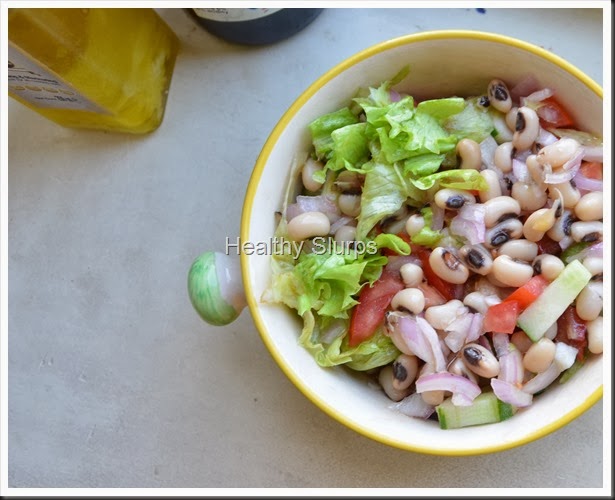
A very Happy New Year to all readers of Healthy Slurps. There is something about the air during New Year which is very invigorating and refreshing. Goodwill, cheer, positivity abound in everyone’s heart during this season. Here is my first recipe for this year which has packed in it, all the love and cheer of this season.
To kick start this New Year with more healthy recipes, here is a salad that I assembled today. As I have mentioned earlier, salads are created with available produce at my home without sticking to any recipe. The reason I am documenting them here is to share the recipe with myself as much as with all of you. For I find myself at a loss to remember all ingredients when I want to recreate that last great salad.

Come, eat me
You Need
  1. Black eyed beans ( Lobia ) – 1 cup, soaked for at least an hour
  2. Cucumber – 1
  3. Red Onion – 1 medium
  4. Roma Tomato – 2 medium
  5. Iceberg Lettuce – Roughly torn and measure 2 cups
For Dressing
  1. Red Wine Vinegar – 2 tbsp
  2. Extra Virgin Olive Oil – 8 tbsp
  3. Crushed Black Pepper – 1 tsp
  4. Salt – 1 tsp
  5. Granulated Sugar – 1 tsp
To Assemble
  1. Whisk all ingredients for dressing together in a bowl.( I used a fork to whisk them,) quite simple really. Set aside.
  2. Peel the lettuce leaves from the head and immerse in ice cold water.
  3. Pressure cook the soaked beans until just done. I pressure cooked them by simmering the flame for 5 minutes after the cooker gave out the first whistle.
  4. Peel and chop the other three salad ingredients in the same shapes – go with dice, slice or cubes. The only rule is to be uniform. That does give the salad a good appearance.
  5. Drain the water from the cooked beans, if any. Do not discard but use in soup, sambar, or as cooking liquid for any vegetable too.
  6. Toss all the ingredients and the dressing together in a suitable large bowl.
  7. Chill for half an hour and serve.
Filling and Tasty Salad
Come, Eat me

Dec 3, 2013

Peanut and Peanut Butter


Peanuts / Groundnuts have been used in several cuisines in India and we do have a rich repertoire of dishes with peanuts. Who does not like Sabudana khichdi topped with roasted peanuts? Or peanut sundal or peanut chutney? Or what can beat the joy of munching on a peanut chikki square?

Peanut butter, on the other hand, is a recent entrant in India. United States leads in peanut butter production. Interestingly, India is the second largest producer of peanuts in the world and United States grows just a third of India’s peanut crop!

Health benefits of Peanuts

  • Peanuts have high protein content (highest among nuts). It is a valuable source of protein.
  • Peanuts are good for your heart. They contain anti-oxidants (even more than in fruits) and zero cholesterol.
  • According to a popular myth “peanuts have too much fat.” The fact is more than 75% of the fat in peanuts is “good fat”,(MUFA and PUFA) needed for body functions, keeps heart healthy and maintains normal body weight.
  • Roasted or boiled peanuts are great. However, fried peanuts are not. Fried peanuts have trans fats, hence not advised.
  • High in fibre, higher than other edible nuts such as almond, cashew, pistachio, and walnuts. Also has Vitamins B & E, Manganese, and Magnesium.

Benefits of Peanut Butter

Peanut butter has both health and convenience benefits.

  • Given the health benefits of peanuts, it is healthier than other table spreads such as cheese spread, butter, margarine, and jam.
  • In a vegan / vegetarian diet, peanut butter can help fill in the gap of protein requirement.
  • In a person who has normal body weight and is physically active, peanut butter is a healthy option as part of balanced meal.
  • For sports people, peanut butter is a great energy-protein-fat source.
  • Peanut butter was promoted as a super food in the United States about 100 years ago to feed starving people.

It is convenient in multiple ways. With its creamy spreadable consistency, it satisfies hunger with minimum bulk to a meal. It is a ready-to-eat food available in a jar. It has a long shelf life and needs no refrigeration. Hence it can be used on road trips, outdoor camping, etc. Peanut butter lends itself to several sweet or savoury meal options such as PBJ sandwiches, or as dip when combined with condiments, or as satay sauce, or salad dressing.

Caution before consuming peanuts and peanut butter

! If you are allergic to peanuts or any nuts, DO NOT consume peanuts or peanut butter. It can have mild to serious health consequences.

! If you are on a weight loss diet or on a special diet for kidney ailments, peanut consumption has to be carefully monitored.

! Presence of aflatoxins in peanuts can cause serious digestive disorders. Hence, always purchase peanuts and peanut butter from reliable sources.

Afterword

Recently I attended the “Health Workshop on Peanut Butter” conducted by Agro Tech Foods (makers of Sundrop brand of food products) at Bangalore . Dr. Swarupa Kakani, well-known nutritionist and head of Dietetics Department at Sagar Hospital, Bangalore led the workshop.

This inspired me to independently research nutritional value of peanuts and peanut butter. This post presents my views along with some of the material presented at the workshop.

Here are some recipes shared by Agro Tech foods with us at the workshop.

Apple, peanut butter, Granola sandwich

Ingredients

Any variety apple – 1 cored and sliced horizontally

Peanut Butter – 2 tbsp

Low fat Granola – 1/2 cup

Method

Spread1 tbsp peanut butter over an apple slice. Sprinkle some granola over the peanut butter.Top with another apple slice or serve as open – faced sandwich.

Peanut butter, apple, granola sandwich

Peanut Butter Milk shake

Ingredients

Peanut Butter – 1 tbsp

Jam – 2 tsp (optional)

Milk – 1 cup

Vanilla Ice cream – 1 scoop

Method

Add all ingredients except ice cream to a blender. Whip until frothy.

Transfer to a glass. Top with Ice cream and serve.

Peanut Butter Milkshake

Jun 2, 2012

Sweet Potato Halwa


Sweet potato is a very healthy tuber and can be used in several dishes.I have found dishes made from this wonder tuber in several cuisines across the world. The many health benefits associated with sweet potato made me want to use it at my home too.To my delight, my old neighbour Renuka had a simple recipe using this vegetable.  I learnt this unbelievably simple-to-prepare-yet-very-tasty halwa from her.  After jazzing it up with some fragrant cardamom powder, no one could guess the base of the halwa. Do try it out for it’s ease of preparation and for the whole world of benefits this wonder tuber has to offer.

What’s good about sweet potato?

  • Topping the list of benefits is the high Vitamin A content of sweet potato – 25 times more than that of carrots!
  • One serving  (200gm,= 1 cup) of sweet potato cooked, takes care of a quarter of fibre needed for a day, Staying away from refined, sweet foods and still getting a ‘healthy sweet dessert’ was never so easy and rewarding !
  • Sweet potato is a great source of Vitamins B and C too - Again 10 times more Vitamin B and C available than in carrots.  It scores high on minerals such as Magnesium, Manganese, Potassium and Calcium too. This unique combination makes it worthwhile to include the tuber in diets of teenagers (rapid growth), sports people (essential minerals). Good for people with high blood pressure too since it is naturally low in sodium.
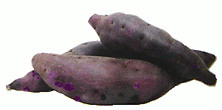
  • The purple-flesh varieties are outstanding sources of anthocyanins, especially peonidins and cyanidins –very powerful natural anti –oxidants. This group of flavonoid compounds also help in maintaining strength of blood vessels and capillaries, reduces inflammation at the tissue levels and inhibits formation of LDL cholesterols.

Interested in including sweet potato in your diet? Read on for a simple recipe…

warm halwa


You needSweet potato

  1. Sweet Potatoes – 750 gms
  2. Jaggery – 300- 400 gms, depending on your sweet tooth
  3. Fresh grated coconut – 100 gms ( desiccated coconut will do just fine too)
  4. Ghee – 1+1/2 tbsp.
  5. Fresh water – 1 cup
  6. Green cardamom powder – 1/2 tsp.

To assemble

Wash, peel and chop sweet potatoes into 1” squares, any even size will work.

chunks of sweet potato

Pressure cook the sweet potatoes with 1 cup water for 2 whistles. I used a pressure handi and pressure cooked, and stirred up the halwa in the same pot.

pressure cooked

Mash the cooked tubers into a coarse mush.

Mushed up glory

Pound the jaggery into small chunks (if you had a huge chunk to begin with). Measure out 300 gms with a kitchen scale or you could use 2 level cupful. Add it to the mushed up sweet potatoes, add 1/2 cup water if the mixture looks very dry, and stir up over medium heat. Once the mixture begins to bubble, add the ghee and blend it in too.

Blend in jaggery and ghee

Your halwa should be ready in 10 minutes of stirring over medium heat. Look for a glaze, sheen to the halwa to check it’s done-ness. Mix in the grated coconut, sprinkle green cardamom powder and you are ready to go! Serve warm, garnished with extra grated coconut if you wish.

dressed halwa ready for hungry kids


Plated and presented by - Raja

May 31, 2012

The Serendipity Sundal


“Mom, what’s for lunch?” Startled, I looked up the clock to see it was just 10 minutes to our lunch time. I was deeply immersed in some cleaning chore and had lost count of time. So here I was with a bowl of boiled sprouted peas and some steamed rice. I had 10 minutes to turn these into lunch!  I work best under pressure. (I mean, when –time–is–running-short kind of pressure, and not the boss-down-my-neck kind of pressure) The sundal I assembled proved this right!  A bowl of yummy goodness was the result. The side dish worked well with chilled curd rice. So why serendipity? I was searching for an idea for a quick side dish and wound up with this filling, tasty, nourishing dish!
 
What’s good about this dish?Peas and  corn
  • Sprouts are real, live, complete, nutrient packed, power houses.
  • Pea sprouts are rich in Vitamin A, B, C, E, the minerals Calcium, iron and all essential amino acids.
  • While pressure cooking does take away some nutrients, sprouting and cooking renders the protein easily digestible, ensures it is well absorbed, and prevents discomfort due to indigestion. So this is a good cooking method for people with IBS, Mal absorption syndrome.
  • Sprouts are vital for teenagers, people engaged in active sports, pregnant and breast feeding mothers, weight-watchers and for body builders.
  • Including sprouts in a vegan /vegetarian diet improves the protein quality of the meal.

You needall dressed up!
  1. Red onions –  dice and measure 1 heaped cup
  2. Capsicum – chop and measure 1/2 cup ( I used green, red or yellow would work well too)
  3. Frozen /Fresh corn kernels – 1/2 cup
  4. White peas sprouts – 1 level cup
  5. Fresh /Frozen coconut – grated, 2 tbsp
  6. Green chilli – 3
  7. Garlic – 1-2 pods
  8. Salt – 1 level tsp
  9. Turmeric powder – 1/2 tsp
For seasoning
  1. Cooking oil – 1 tbsp
  2. Mustard seeds – 1 tsp
  3. Cumin seed – 1 tsp
  4. Coriander leaves – chopped, 2 heaped tbsp
To assemble
  • Pressure cook white peas sprouts until soft, but not mushy.
  • Heat oil in a fry pan / kadhai, add mustard seeds and cumin.
  • When it splutters, add diced onions fry well till light brown (you can add 1/2 tsp of sugar while frying to get the onions taste sweet).
  • Tip in the diced capsicum, corn kernels, toss well.
  • Once the veggies look ‘fried but not wilted’(in about 2 minutes), toss in the cooked peas.
  • Add salt and turmeric powder, mix well. Cover for a minute.
  • Make a  coarse powder of coconut, garlic and green chilli in the mixer. I just used the ‘pulse’ button a couple of times. Add this to the peas and mix in well.
  • Top off with chopped coriander for a very fragrant, healthy dish.

Variations
  • You can add/omit veggies used in this recipe.
  • Add a zing to the dish by squeezing in lemon juice after cooking.
  • Add fennel seeds/saunf to the seasoning to give a nice twist to flavour.
  • Use parboiled peas and corn with raw onion, capsicum and shredded carrots for a colourful salad.
The Serendipity Sundal - up close


Sending this hearty dish to Renuka's ongoing event 'Salad splendour'

Feb 20, 2011

Lemon Poha / Aval

The humble aval / avalakki / poha at its tangy best. An anytime meal / snack, kids and adults alike love the tang, the crunch of peanuts and it’s inviting colour. What I love best about this dish is the nutritive punch it delivers.
lemon poha
You need rinsed poha
  1. Medium thick poha – 2 cups, heaped
  2. Lemons – 2
  3. Turmeric powder – 1 tsp
  4. Hing powder – a good pinch
  5. Salt – 1 tsp or more
  6. Sugar – 2 tsp or more (optional)
For seasoning ingredients for seasoning
  1. Vegetable oil – 2 tbsp
  2. Mustard seeds – 1 tsp
  3. Urad dal – 1 tbsp
  4. Chana dal – 1 tbsp
  5. Peanuts – 2-3 tbsp
  6. Curry leaves – 7-10, torn up
  7. Green chillies – 3-4, slit lengthwise
  8. Coriander leaves – chopped, 3/4 cup
To assemble
  • Wash the poha under running water in a colander, allow the water to drain, set aside. 
rinsed poha in colander
  • Heat oil in a deep sauce pan, add ingredients for seasoning in order, save coriander leaves for later.
mustard crackling in oil  add urad dal,chana dal,peanutsadd curry leaves,chillies,hing and turmeric
  • Add the rinsed poha now, tip in sugar, salt, coriander leaves in this order and gently fold the mixture to avoid squishing the poha.
fold in poha gently
  • Now is when you can squeeze in juice of two lemons (you can increase or decrease quantity of juice as suits your taste). Fold in the mixture with a gentle hand until poha, lemon juice and seasonings are well incorporated.
Your tangy poha is ready to be gobbled down.
Tasty, tangy poha
Variations
  • This is my basic version of lemon poha. You can add any or all of these vegetables to the seasoning mixture to add variety to the dish – chopped green or any coloured capsicum (peppers), grated carrot, boiled green peas.
Nutri notes
When compared to raw rice -
  • Rice flakes /poha have twice the calcium  and three times the fibre content. 
  • Poha also has thrice the thiamin (Vitamin B1) and twice the niacin (Vitamin B ) content.
  • The absolute stunner comes from the whopping 20 times more iron than in raw rice!! Add to this the availability of copper too, poha is a nutrient storehouse.It is a valuable food for those who are – anaemic, sportspeople, teenagers, pregnant or lactating women.
  • With the presence of Copper at  0.37mg /100gm in poha, and with the addition of lemon juice (Vitamin C) in this recipe, the dish is an excellent iron source especially for vegetarians. Reason – Copper and and Vitamin C are necessary for iron absorption in the body.
  • Addition of dals and peanuts also add to the protein content of the meal, apart from adding texture.
  • The dish can be made more wholesome by adding boiled green peas (protein), boiled corn, capsicum or shredded carrots(vegetables).
I hope I have conveyed the importance of using poha in our weekly diet well enough. Do let me know what you think about the nutrition information I have given here.