Showing posts with label spreads. Show all posts

Jun 3, 2014

Peerkangai chutney


I seem to be on a spree to cook with un-glamorous, un-restaurant-y, humble vegetables. Well, why not? Gourds are very easy on the wallet and the waist line, mostly neutral in flavour, lend body to various dishes, have varied nutritional benefits but are ignored despite all these.

Pic Courtesy - Sankalpfarms.com

No South Indian breakfast is complete without chutney. That inevitably means use of fresh coconut. On days when you do not have stock of fresh/frozen coconut, or want to limit it’s use in daily meals, you need some saviour to rescue the day’s chutney. Enter the star of today’s chutney - ridge gourd. I have used it in this recipe to benefit from the nutrients it offers, as much as a coconut-substitute.

  • Ridge gourd is high in moisture and crude fibre (good news for those with chronic constipation).
  • It is a very low calorie vegetable, so great to include in a weight loss diet. It adds plenty of bulk to a meal without adding significant calories! This means, you can eat a whole cupful of ridge gourd and add less than 20 calories to the meal!
  • Ridge Gourd has negligible Sodium and a fair source of Potassium. Hence it is useful for people with high blood pressure or certain kidney ailments where sodium is severely restricted.

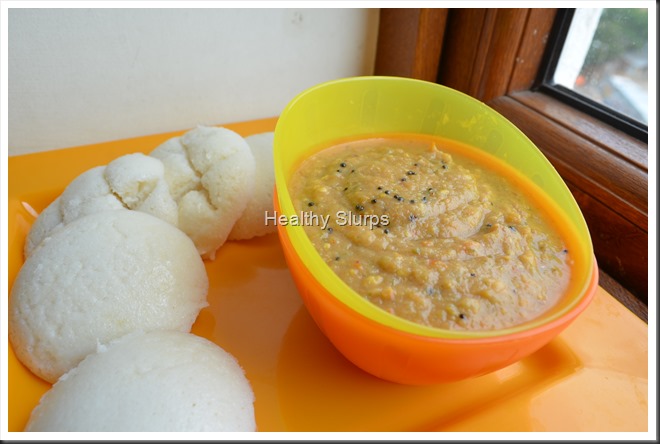
Here is how I made the chutney. We used it to complement soft idlis for breakfast. It was spicy, tangy and declared ‘good’ by my family. Do try it out and let me know how you liked it. The quantity here serves 5-6. Halve to serve 2-3.The chutney can be refrigerated and used within 2 days.

Preparation Time – 15 minutes ; Cooking Time – 5-6 minutes ; Serves – 5 – 6

Allergy Information – Does NOT contain gluten, egg, soya, peanuts, corn, lactose.

You Need

 Cookware  -  A frying pan, mixer grinder or food processor

Ingredients

  1. Red Onion – 1 medium, or measure 1/2 cup after chopping
  2. Roma Tomatoes – 2 medium, or measure 3/4 cup chopped
  3. Ridge Gourd / Peerkangai – 1 big, or measure 1+1/2 cups sliced
  4. Green chilli – 4-5 cut into halves
  5. Chana dal – 2 tbsp
  6. Tamarind – 1/4 tsp*
  7. Salt – 1/2 tsp
  8. Oil – 1/2 tsp
  9. Coriander leaves – 6-7 stalks with leaves (optional)

For Seasoning -

  1. Oil - 1/4 tsp
  2. Mustard seeds – /4 tsp
  3. Hing Powder – a pinch

* Use Tamarind if tomatoes are not tart enough, or add a couple of extra tomatoes and avoid tamarind. You can even omit tamarind entirely if you do not prefer a sour-ish chutney

To Assemble

  1. Prepare the vegetables for frying. To begin,  wash, peel and chop onions. Next, wash peel and chop tomatoes and green chilli. Rinse the ridge gourd well, peel part of the rough skin at the ridges, while leaving some skin on the vegetable. Cut into thick slices.Fry all vegetables for chutney
  2. Heat a small wok / frying pan. Add the half tsp oil, let it heat up. Add the chana dal, fry over medium heat until golden brown. Add all the prepared vegetables, chilli, tamarind and salt. Toss well, (do not add any water), cover and simmer for 2–3 minutes or until you find the tomato skin has shrunk a little bit and the gourd seems to go slightly limp. If you are using  coriander leaves, add at this point, and switch off flame.
  3. Let it cool. Grind to a coarse paste. You will not need any water for grinding. After removing to a bowl, rinse out the mixer jug with a 1/4 cup of water and add to the chutney if you wish to dilute it. Chutney with Seasoning
  4. Heat oil for seasoning. Crackle mustard seeds, add hing powder and pour over the chutney.
  5. Serve as accompaniment to idli, dosa, or over plain steamed rice, as a sandwich spread or as dip for crudites too!

Soft Idlis with Spicy Chutney

Fresh breakfast for two!

Jan 17, 2014

Peanut Chutney

Peanut chutney and idli - power breakfast

My daughter is a total peanut fan.  She eats peanuts roasted, fried, boiled, in salads, asks for them in lemon rice, or if I am not looking, she gobbles them even raw! A jar of peanuts are never safe around her. To the extent that she is called the ‘ Li’l monkey’ of the house. She pouts and sulks when called so, and that tickles her big brother. So he runs her insane by chanting ‘monkey, monkey monkey’. Her dad calls her his fav  cute Li’l monkey – that did not seem to appease her either.
And then one day, I made this peanut chutney. Obviously, you cannot see the peanuts in them cos they are ground! Guess what? Her dad loved the chutney so much, he asked me, “What chutney is this? It pairs so well with idli” . My daughter was delighted. She ran to her dad, and told him “You are my favourite big monkey now, cos you like peanuts too! This is peanut chutney!” All of us had a hearty laugh. And peanut chutney came to stay forever at our home.
There are many versions of peanut chutney made, here is my unique combination of ingredients. I often add some coriander leaves, or mint leaves, a clove of garlic or even curry leaves to the mixture and then blend it up. You could try those variations too.
You Need
  1. Raw peanuts with skin – 1/2 cup
  2. Coconut, grated – 2 tbsp
  3. Onion – 1, medium sliced
  4. Green chilli – 4, cut in halves
  5. Tamarind pulp – 1 tsp
  6. Salt – 1/2 tsp
  7. Vegetable Oil – 1/2 tsp
  8. Drinking water – 1/4 to 1/2 cup for grinding
For Seasoning -
  1. Vegetable Oil – 1/4 tsp
  2. Mustard seeds – 1/4 tsp
  3. Urad dal – 1/4 tsp
  4. Curry Leaves – 4-5
Fry ingredients for chutney
To Assemble
  1. Take oil in a fry pan / wok / kadai, Heat it.
  2. Add whole peanuts to it, fry for 2 –3 minutes.
  3. Next, tip in green chilli cut in halves, followed by onion slices, last comes the tamarind.
  4. Fry well over medium to high flame, for 2-3 minutes more. Do not burn the ingredients. Stop frying when the peanuts look golden brown and the onions turn translucent.
  5. Add salt and grated coconut to this mixture, switch off flame ( cool it if you have time) and blend in a mixie to a coarse-ish smooth paste. You may need to add some water, say 1/4 cup while grinding to get a thinner chutney.
  6. Heat ingredients for seasoning, when the dal gets a warm golden hue, pour on top of chutney.
  7. Enjoy with idli, dosa, use as sandwich spread, or even with hot steamed rice.
Tasty tangy peanut chutney
Please do read the allergy information before trying out this recipe, especially if you have never eaten peanuts in any form before or if you have noticed any other food allergy symptoms too.
IMPORTANT ALLERGY INFORMATION
Some people develop an allergy to several nuts including peanuts. Symptoms may range from itching around mouth or throat, skin reactions, digestive disturbances, or more serious symptoms like breathing trouble too. In such situations, please stay away from peanuts in all forms – whether raw, boiled, roasted or fried. However, refined peanut oil seems to be tolerated even by people with peanut allergy. Still, do consult with your doctor before attempting to include peanuts in your diet.
PEANUT NUTRITION INFORMATION
Peanuts are a high energy food, most of the energy coming from fats and protein. As we know, all fat is not bad fat, peanuts are cholesterol free, have omega 3 and Omega 6 fatty acids.
To give a better picture, the total fats in 100 gms of raw peanuts is 49 gms, of which monounsaturated fats are 24 gms and polyunsaturated fats are 15 gms, while the saturated fats in peanuts are only 6 gms. They also have a high content of Omega 6 fatty acids – 15 gms / 100 gms.This makes it a valuable ‘good fat source’ in vegetarian diets.
Peanuts are also known to prevent cancer, help in weight control in moderate amounts and also have very valuable anti oxidants which have the heart health benefits and also prevent stroke. Regular consumption of peanuts also helps in preventing Alzheimer’s.
Peanuts are an inexpensive, ready to eat protein source, go ahead and enjoy it’s benefits.
Peanut chutney up close!

Dec 3, 2013

Peanut and Peanut Butter


Peanuts / Groundnuts have been used in several cuisines in India and we do have a rich repertoire of dishes with peanuts. Who does not like Sabudana khichdi topped with roasted peanuts? Or peanut sundal or peanut chutney? Or what can beat the joy of munching on a peanut chikki square?

Peanut butter, on the other hand, is a recent entrant in India. United States leads in peanut butter production. Interestingly, India is the second largest producer of peanuts in the world and United States grows just a third of India’s peanut crop!

Health benefits of Peanuts

  • Peanuts have high protein content (highest among nuts). It is a valuable source of protein.
  • Peanuts are good for your heart. They contain anti-oxidants (even more than in fruits) and zero cholesterol.
  • According to a popular myth “peanuts have too much fat.” The fact is more than 75% of the fat in peanuts is “good fat”,(MUFA and PUFA) needed for body functions, keeps heart healthy and maintains normal body weight.
  • Roasted or boiled peanuts are great. However, fried peanuts are not. Fried peanuts have trans fats, hence not advised.
  • High in fibre, higher than other edible nuts such as almond, cashew, pistachio, and walnuts. Also has Vitamins B & E, Manganese, and Magnesium.

Benefits of Peanut Butter

Peanut butter has both health and convenience benefits.

  • Given the health benefits of peanuts, it is healthier than other table spreads such as cheese spread, butter, margarine, and jam.
  • In a vegan / vegetarian diet, peanut butter can help fill in the gap of protein requirement.
  • In a person who has normal body weight and is physically active, peanut butter is a healthy option as part of balanced meal.
  • For sports people, peanut butter is a great energy-protein-fat source.
  • Peanut butter was promoted as a super food in the United States about 100 years ago to feed starving people.

It is convenient in multiple ways. With its creamy spreadable consistency, it satisfies hunger with minimum bulk to a meal. It is a ready-to-eat food available in a jar. It has a long shelf life and needs no refrigeration. Hence it can be used on road trips, outdoor camping, etc. Peanut butter lends itself to several sweet or savoury meal options such as PBJ sandwiches, or as dip when combined with condiments, or as satay sauce, or salad dressing.

Caution before consuming peanuts and peanut butter

! If you are allergic to peanuts or any nuts, DO NOT consume peanuts or peanut butter. It can have mild to serious health consequences.

! If you are on a weight loss diet or on a special diet for kidney ailments, peanut consumption has to be carefully monitored.

! Presence of aflatoxins in peanuts can cause serious digestive disorders. Hence, always purchase peanuts and peanut butter from reliable sources.

Afterword

Recently I attended the “Health Workshop on Peanut Butter” conducted by Agro Tech Foods (makers of Sundrop brand of food products) at Bangalore . Dr. Swarupa Kakani, well-known nutritionist and head of Dietetics Department at Sagar Hospital, Bangalore led the workshop.

This inspired me to independently research nutritional value of peanuts and peanut butter. This post presents my views along with some of the material presented at the workshop.

Here are some recipes shared by Agro Tech foods with us at the workshop.

Apple, peanut butter, Granola sandwich

Ingredients

Any variety apple – 1 cored and sliced horizontally

Peanut Butter – 2 tbsp

Low fat Granola – 1/2 cup

Method

Spread1 tbsp peanut butter over an apple slice. Sprinkle some granola over the peanut butter.Top with another apple slice or serve as open – faced sandwich.

Peanut butter, apple, granola sandwich

Peanut Butter Milk shake

Ingredients

Peanut Butter – 1 tbsp

Jam – 2 tsp (optional)

Milk – 1 cup

Vanilla Ice cream – 1 scoop

Method

Add all ingredients except ice cream to a blender. Whip until frothy.

Transfer to a glass. Top with Ice cream and serve.

Peanut Butter Milkshake

Feb 12, 2011

Tomato Herb Chutney


Luscious red tomatoes paired with fragrant coriander, the result is a flavourful chutney. My younger one wanted tomato chutney and the elder one wanted a green chutney; I was running short of time and threw both together – result was something all of us liked !
tomato herb chutney
You need
  1. Ripe red tomatoes ( any variety) - 2 big or 3 medium
  2. Green chillies – 3 (can add or reduce according to taste and heat)
  3. Coriander leaves – chopped roughly, 1 cup
  4. Fresh Coconut – grated,  1/4 cup
  5. Salt – 1/2 tsp
  6. Vegetable oil – 1/4 tsp
For seasoning
  1. Vegetable oil – 1/4 tsp
  2. Mustard seeds – 1/4 tsp
  3. Urad dal – 1/4 tsp
  4. Hing powder – a tiny pinch
  5. Curry leaves – 4-5 torn up
quartered tomatoes
 To assemble
  1. Wash and pat dry tomatoes. Quarter them.
  2. Wash green chillies and chop up.
  3. Remove roots of coriander, rinse thoroughly, drain and chop roughly.
  4. Grate coconut, measure out 1/4 cup.
  5. Heat up oil in a small frying pan, add green chillies, step aside.
  6. Tip in chopped tomatoes, toss to coat oil evenly.fried ingredients
  7. Add the salt now, and fry for  a minute more.
  8. When the tomatoes are squishy, (in a minute or two) add the chopped coriander and switch off flame.
  9. Let it cool, add grated coconut and grind to get a fragrant chutney.
  10. Heat oil, add ingredients for seasoning in order and pour over chutney.
  11. Serve with flair as accompaniment for idli, dosa, paratha, steamed rice, sandwiches, well, just about anything!
 tomato herb chutney
Nutri notes
  • Coriander (both leaves and seed) help regulate blood sugar levels by stimulating insulin production.
  • Volatile oils found in the leaves seem to have antimicrobial properties.
  • Coriander reduces lipid peroxides in cell membranes, thus inhibiting free radical formation.
  • In a study conducted on rats fed with high fat diet, adding coriander to the diet increased the HDL and lowered levels of LDL cholesterol.
  • Besides these benefits, coriander is also good source of dietary fibre, magnesium, manganese and fair source of iron.
  • A compound called dodecenal isolated from coriander, has been found to be more effective than antibiotics in fighting salmonella infection.
  • A drink of coriander seeds boiled with water  (in the proportion of 2 tbsp seeds per litre of water) cures urinary tract infection rapidly.
  • Apart from these amazing uses of coriander, it is also a flavanoid and phytonutrient dense food. I guess all this information will prompt us to use more of coriander in our daily foods.
  • Benefits of tomatoes have been discussed earlier, hence I am not repeating it here.
  • Addition of coconut, though minimal, will increase the fat content of the chutney. One alternative is to use chutney dal in place of coconut. The taste does differ, but provides a healthier alternative.